

08.10.2026
Electricity and Heat from Summer Energy
A Practical Example by Bajog Energiespeicher
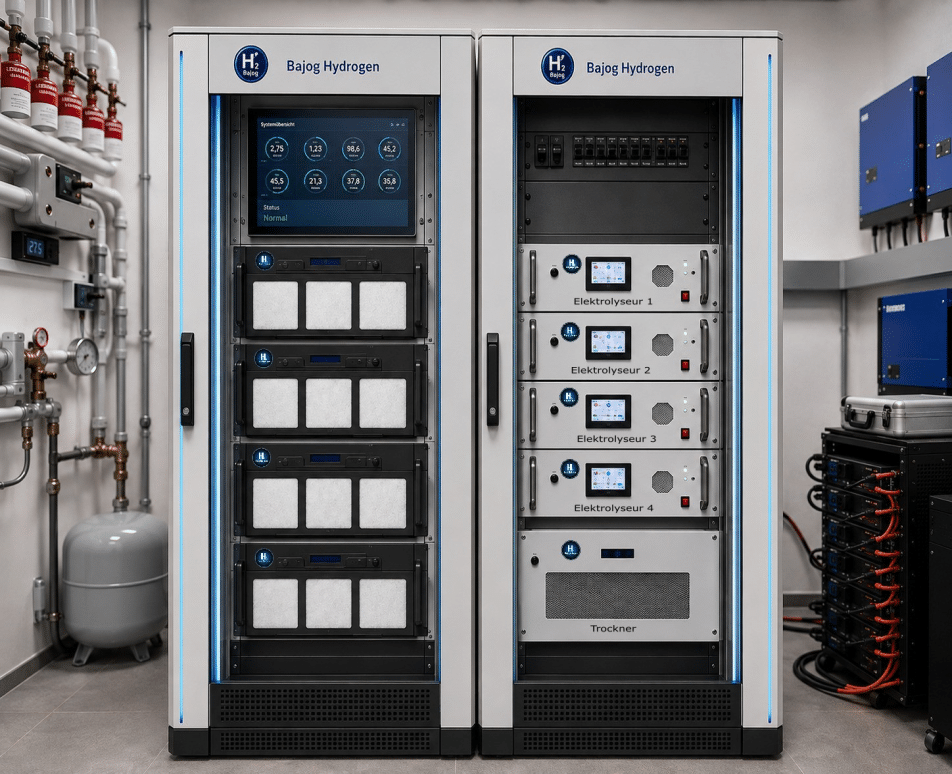
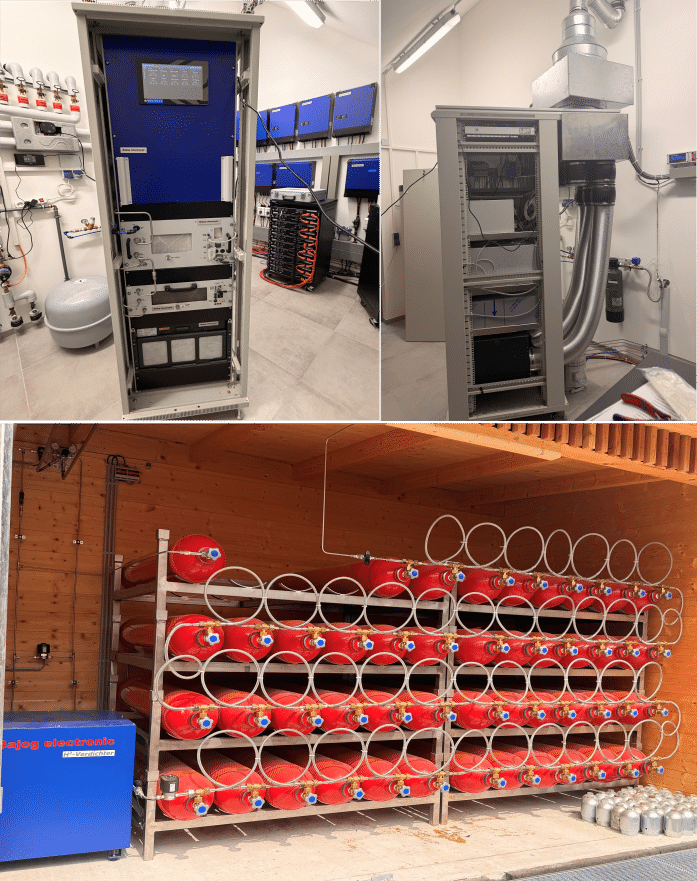
How can the energy generated during the summer be used to supply a home during the winter? In this practical example, we show how photovoltaics, hydrogen production, hydrogen storage and fuel cell technology are combined into a comprehensive energy system.
A single-family home with a separate apartment and a total living area of 600 m² was equipped by us with a comprehensive energy system.
The principle of “self-sufficient energy supply” is based on the use of renewable energy and its storage in the form of hydrogen.
The property is therefore largely independent of external energy supplies and can provide itself with energy using its own energy system.
In the event of a blackout, the system can switch to island mode, maintaining the home’s electrical supply without significant limitations and within a very short time.
During the months with abundant sunshine, surplus energy is used to produce hydrogen. Within 24 hours, up to 1 kg of hydrogen can be produced.
One kilogram of hydrogen has an energy content of around 33 kWh.
Hydrogen Storage for the Winter
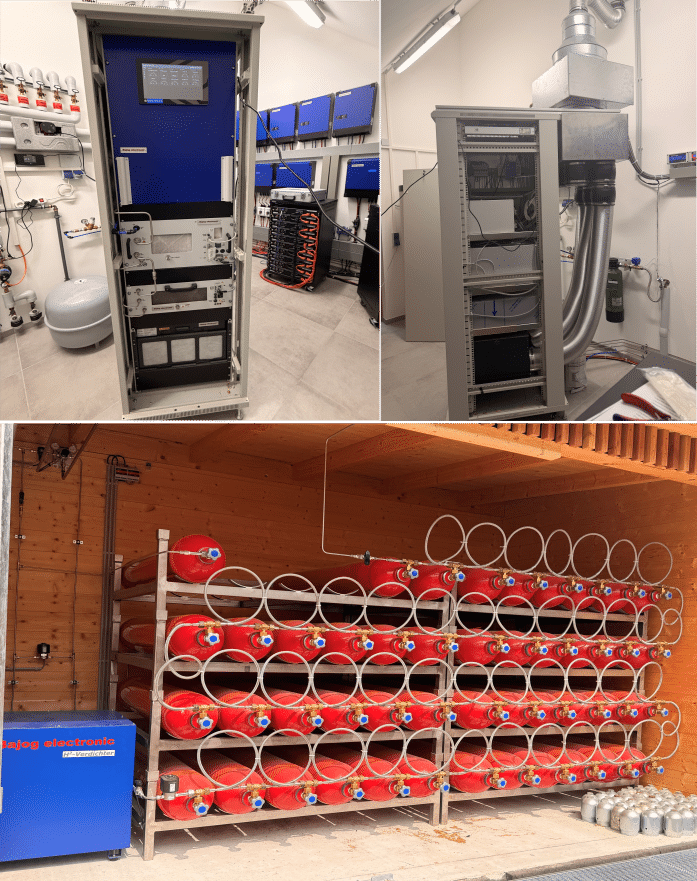
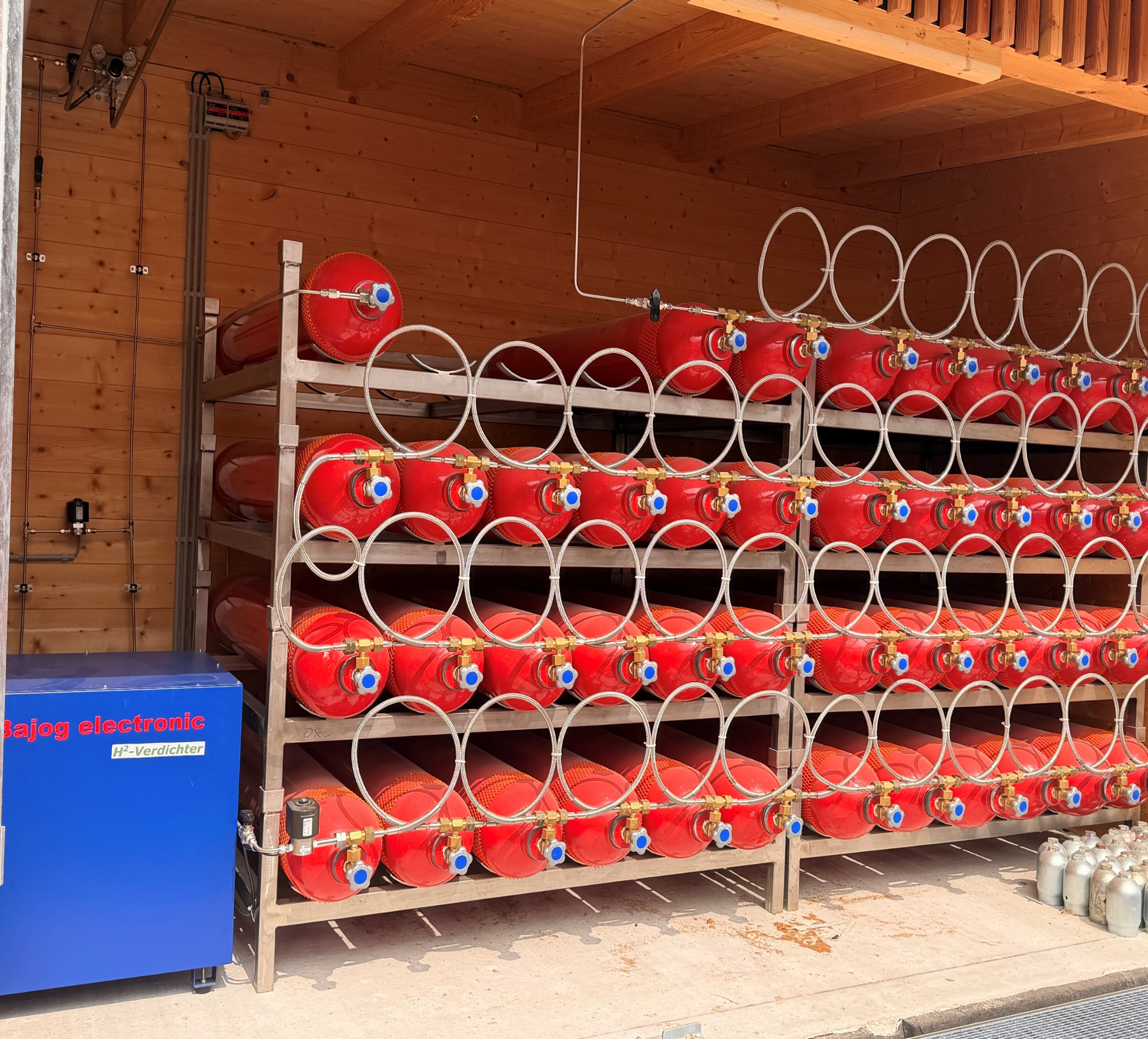
The hydrogen produced during the sunny months is stored for later use during the winter months in special hydrogen storage tanks at pressures of up to 200 bar.
One kilogram of hydrogen has an energy content of around 33 kWh. This allows the energy generated during the summer to be stored over the long term and used at a later point in time.
For the family living on this property, around 1,485 kWh of stored energy are available during the winter.
Electricity and Heat from Hydrogen
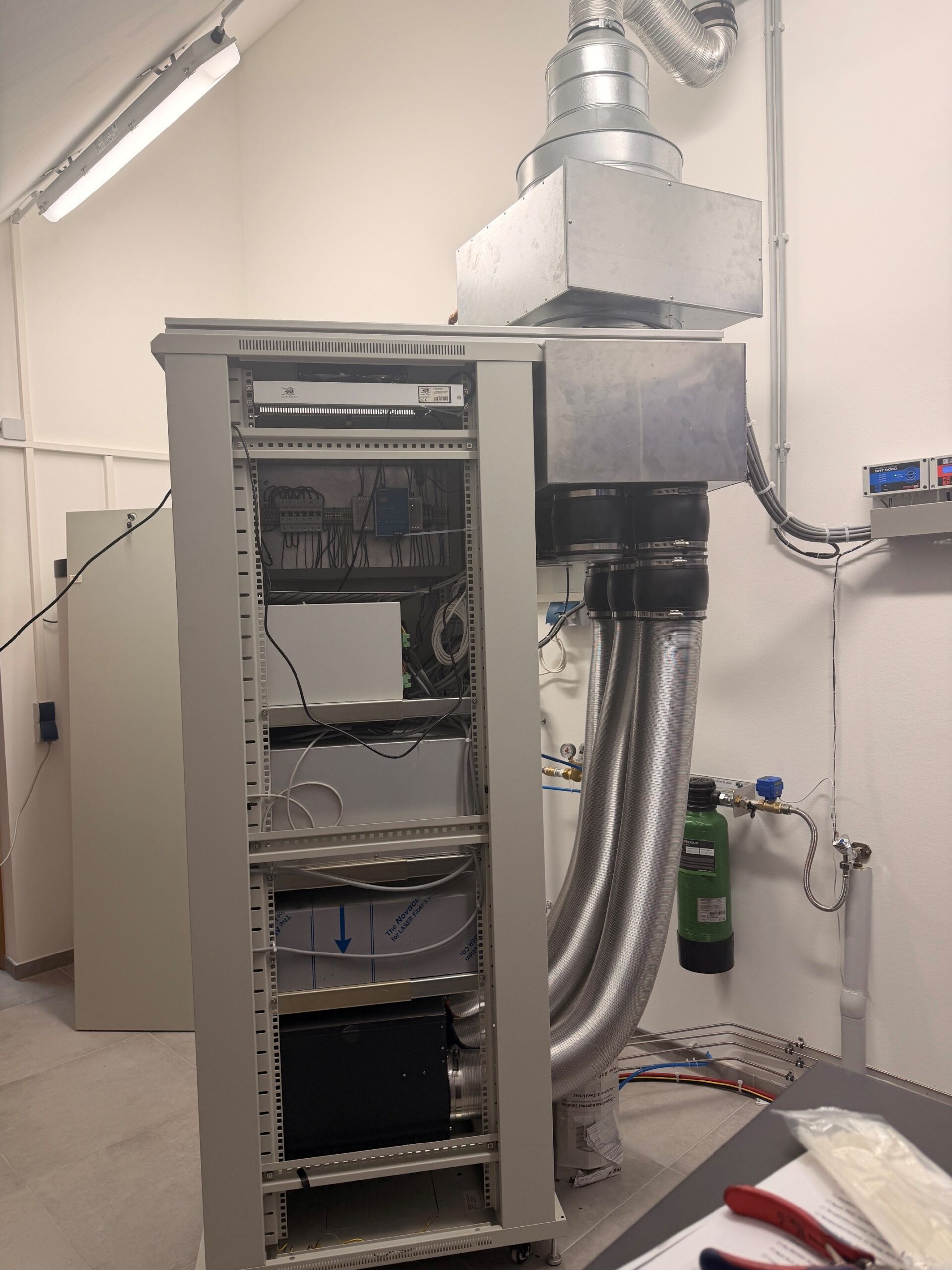
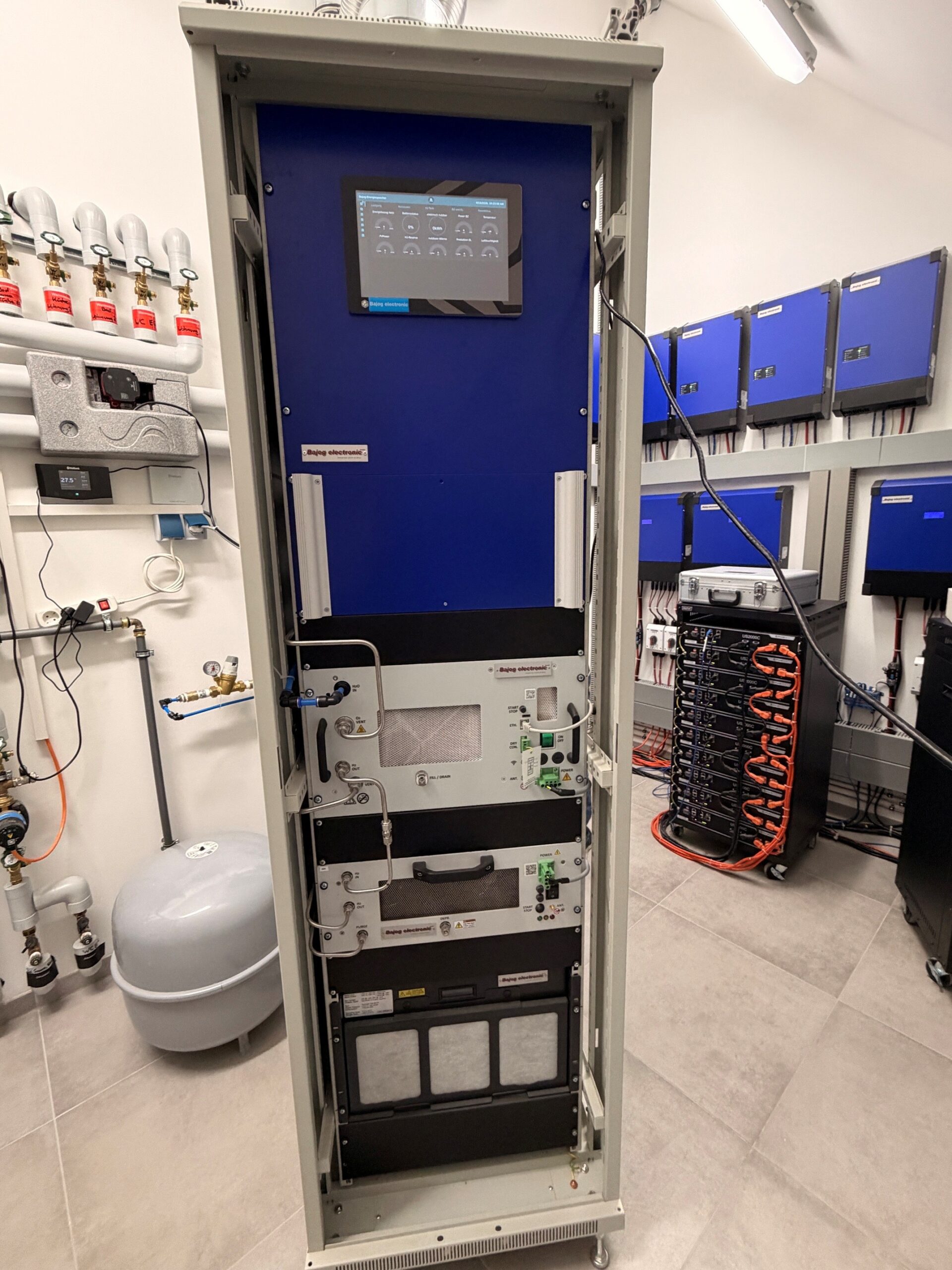
During the winter months, our fuel cells use the stored hydrogen to recover electrical energy while continuously recharging the battery buffer storage system.
The household is supplied with 230/440 V AC via the battery buffer storage system and the installed inverters.
Another advantage of the fuel cells is the waste heat generated during this process, with temperatures of up to 55 °C.
This heat is used via a connected heat exchanger to supply the entire underfloor heating system of the property.
In this way, the stored energy is used particularly efficiently: hydrogen is converted into electrical energy and usable heat.