

02.11.2026
Despite all the conversion processes involved, there is a strong case for a self-sufficient, hydrogen-based energy system (an off-grid solution).
Despite the energy efficiency losses incurred during production and reconversion (PV electricity to hydrogen via electrolysis, hydrogen compression, and hydrogen back to electricity via a fuel cell), hydrogen serves as a seasonal, long-term storage solution that can provide complete energy self-sufficiency for private households.
While batteries are ideal for storing solar power from day to night, they fall short when it comes to storage over the period of months.
Hydrogen bridges this gap.
Furthermore, battery storage systems remain expensive, as Germany continues to be heavily dependent on the import of the necessary raw materials.
When a private PV system generates significantly more electricity during the summer months than the household consumes, there are only two options:
• Feeding the excess power into the public grid for which one receives only a nominal payment while remaining subject and control to the terms of the local utility provider.
• Throttling the system’s output down to near zero.
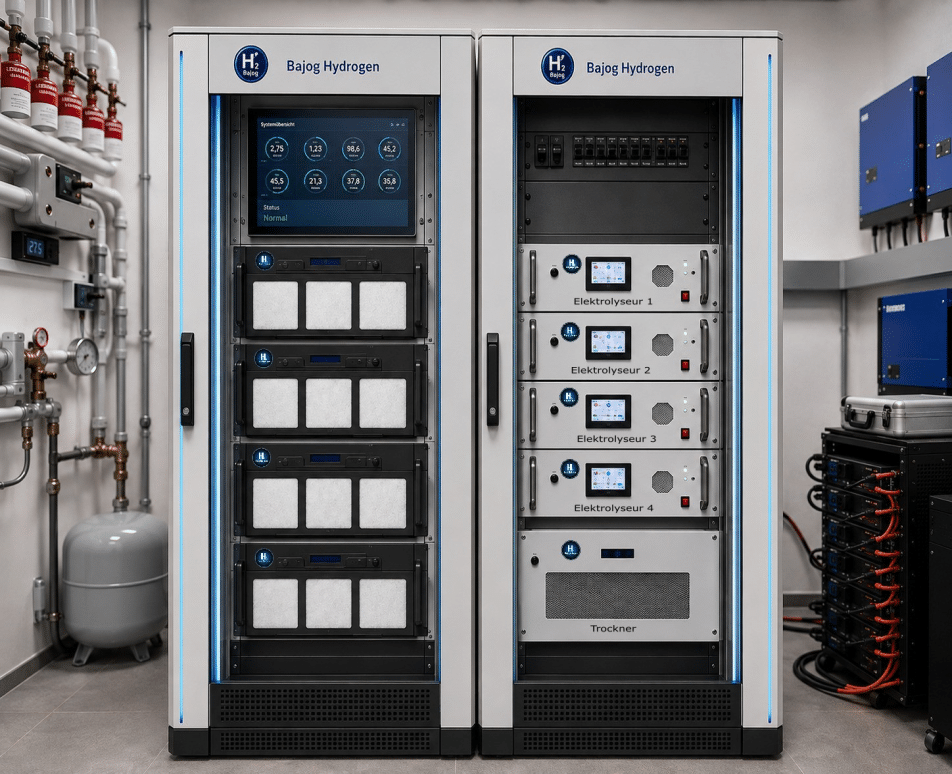
For the general public, home-based systems (such as those from Bajog Electronic) offer several compelling advantages:
Key arguments for hydrogen-based off-grid solutions:
- Seasonal energy storage (summer-to-winter transfer): Excess solar power generated in the summer is converted into hydrogen via electrolysis.
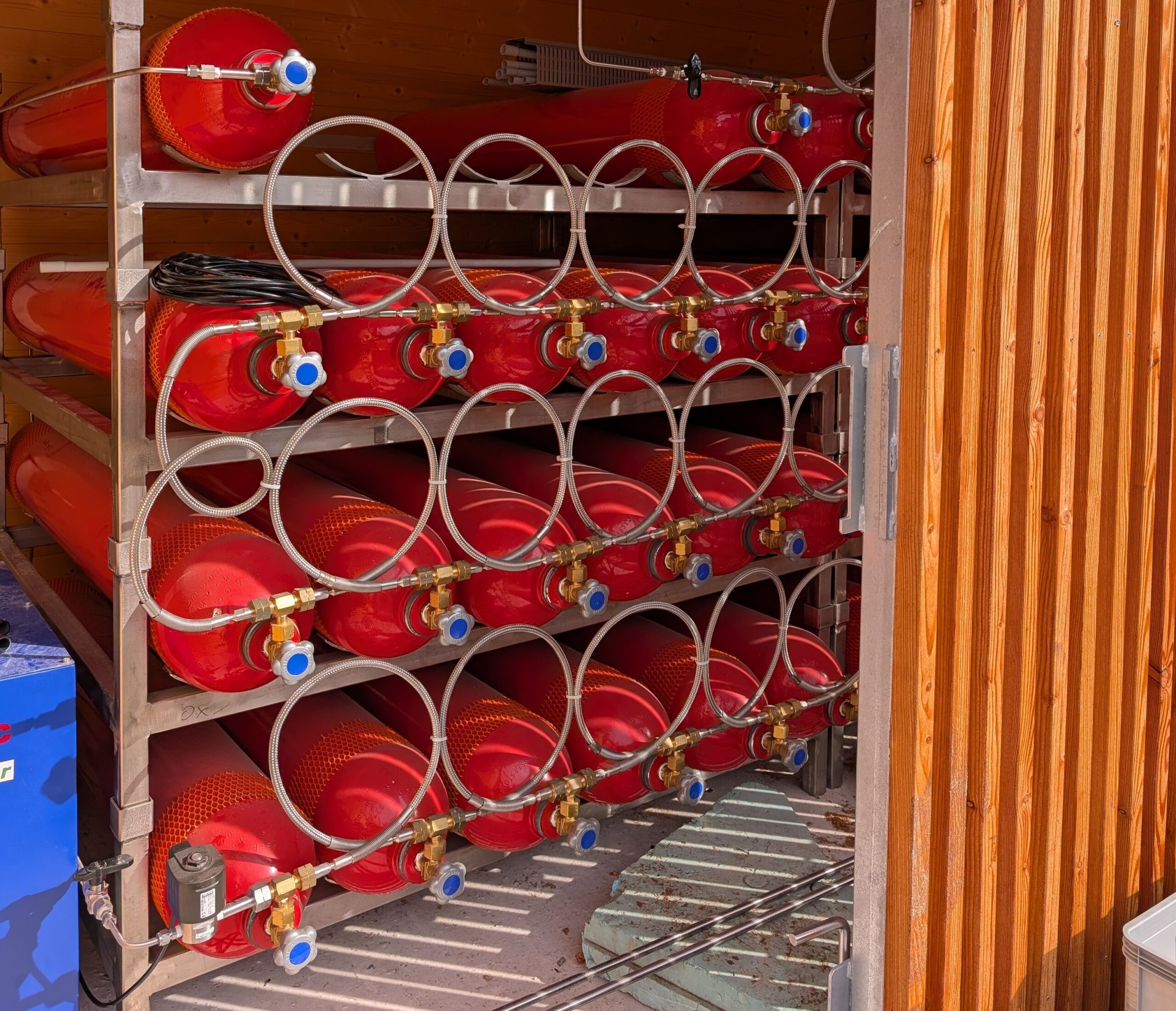
This hydrogen can be stored in pressurized tanks for months with negligible self-discharge, then used in a fuel cell during the winter to provide both electricity and heat.
- Waste heat recovery boosts overall efficiency: While the losses involved in a pure electricity-to-electricity conversion are high, operating the system as a combined heat and power (CHP) unit allows for the capture of waste heat generated during electrolysis and fuel cell operation.
This heat is fed directly into the home’s heating or hot water system, which drastically increases the actual efficiency of the setup within the household increased.
The fuel cells from Bajog electronic, with their 55°C waste heat output, are ideally suited for use in wall and underfloor heating systems.
- True self-sufficiency and resilience: Homeowners become completely independent of public power grids, grid usage fees, and future fluctuations in electricity prices.
The system also provides absolute protection against blackouts.
- Off-grid (island) systems do not feed power into the public utility grid, but they can be operated with a „zero-feed-in“ configuration.
This means that if the on-site system generates insufficient energy, it can draw power from the public grid within 5 milliseconds.
- Energy providers have no access to these off-grid systems and cannot throttle or shut them down.
- No degradation, unlike batteries: Hydrogen tanks do not lose storage capacity over time unlike conventional lithium-ion batteries, which age through repeated charge-discharge cycles.
- Relief for the power grid: Because these decentralized, off-grid systems neither draw power from the grid in winter nor feed excess energy into it during the summer, they help preserve public infrastructure.